
Walking Kumamoto
The Nation as meaningful

(This is my fifth long walk in Japan. The prior ten posts from those trips: From Tokyo to Takasaki, A retreat to Niigata, A pointless little Japan story, From Akashina to Fuji, Walking Fuji, Playgrounds and manhole covers, From Fukuoka to Nagasaki, Burnout in Japan, Walking Hokkaido, In praise of Japanese small.)
I’ve long said Seoul is my favorite city, but when a nasty sinus infection left me stranded there with a miserable concoction of fever, jet lag, and an open schedule1, I realized Japan is where I really wanted to be. There is no country as interesting, comfortable, and fulfilling as modern Japan, which is peak civilization, and there is no place in the world I’d rather be stuck for a month.
So I booked a flight to Kumamoto, in central Kyushu (Southern Japan), because one of the other lessons of my last five years is that mid-sized cities offer richer experiences, with less stress and expense, than larger, heavily touristed destinations, such as Tokyo.
Almost everything a tourist might want from Japan 2, all the thin cultural experiences (food, fashion, nightlife), are available in Kumamoto, but without the opportunistic cynicism that comes with over-tourism. You also have a better chance of understanding what really makes Japan tick3, since Kumamoto retains its Japanese character in ways that central Tokyo, a global city, simply does not.
I also knew exactly what I wanted to do, which was explore the region by walking from downtown Kumamoto towards the small coastal city of Minamata fifty miles south4, one ten mile leg at a time. I could do that, while also staying in the same downtown Dormy Inn hotel5 for a week, because Japanese public transportation is the best in the world.


So for the last five days I’ve fallen into a comfortable routine. I wake each morning, jump on a train to my starting point, then walk through rice fields, past factories, past other train stations, always close to a convenience store with a clean bathroom, before taking a train back to my hotel, where I spend the next hour washing and resting in the public bath, then nab my complimentary chocolate ice pop, followed by an evening at an izakaya, or yakitori-ya, or kaiseki, for an exceptionally clean, fresh, and luxurious meal. Then I do it all again the next day, starting my walk where I ended it the prior day.
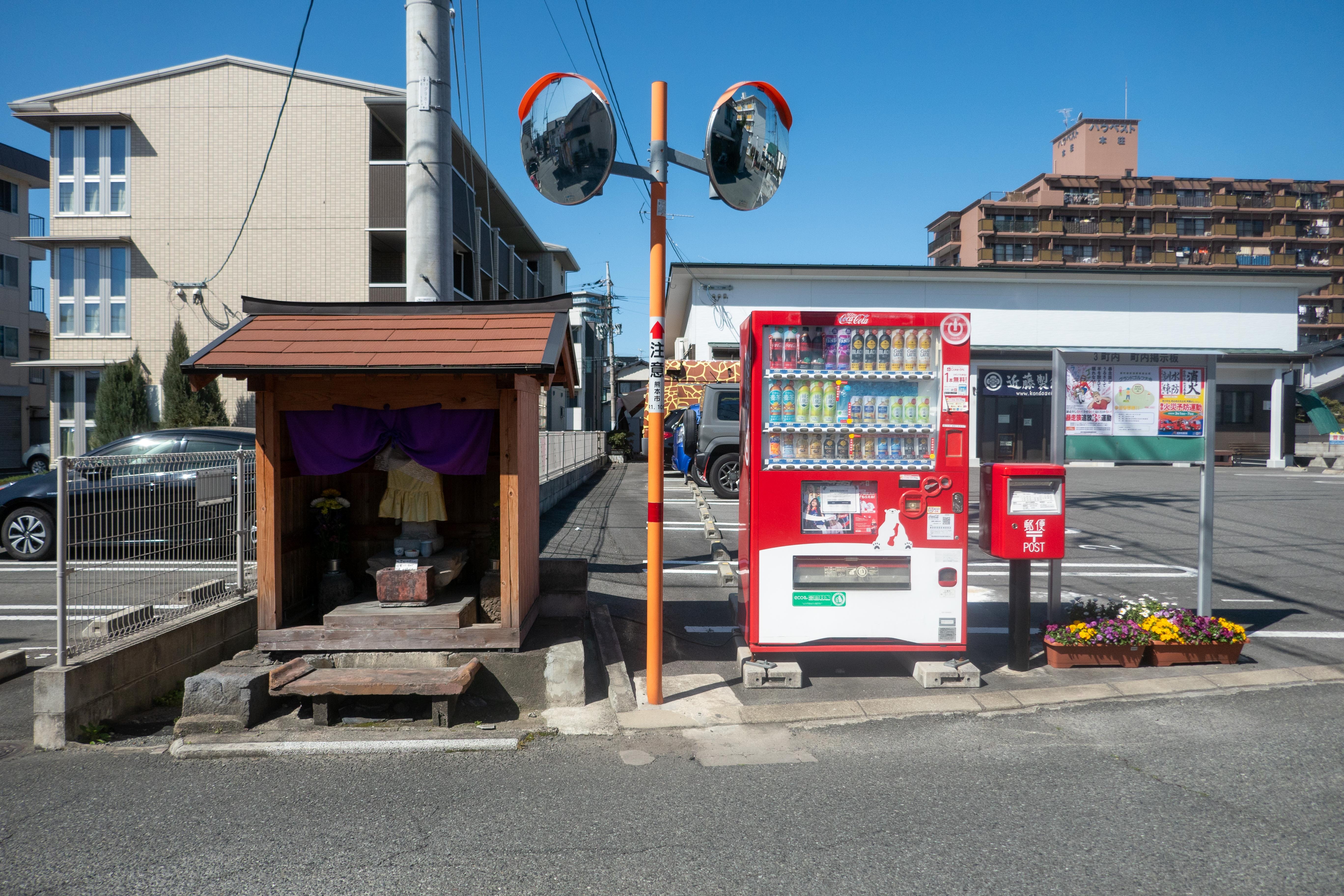
Those treks have all been through familiar landscape. Japan's geography creates a nationwide uniformity: three-quarters mountains, one-quarter floodplains, with almost every city in one of the plains, sprawling across its entirety, filling every buildable space with the built. Kumamoto is no exception.
A haphazard mix of agriculture, industry, and smaller cities. Walking ten miles across one of Japan’s cities means passing from one to the other, sometimes all three at the same time, with a rice field jammed against a factory, juxtaposed next to an apartment complex.


Built Japan, visually, is a mess, and can be downright ugly. A boxy, utilitarian, pulsating, over-curated mess that after days of walking through it begins to feel claustrophobic—It is rectangular to the extreme, and you wonder if the architects understood that angles don’t have to be multiples of ninety degrees. I’ve found myself at the end of walks shouting, into the void, “I want a curve, any curve, just give me a damn curve please.”
It also feels laughably landlocked for a nation with more coastline per capita than perhaps only Greenland. You are never far from the ocean in Japan, but you rarely see it, because Japan doesn’t embrace its coastline the way other countries do, certainly not by spending days lounging on sandy beaches. The shore is hidden behind huge and ugly concrete sea walls, a justifiable tsunami defense that has turned paranoid, resulting in a fortress mentality towards the seas.
I have tried many times to walk along the coast, but it’s never been rewarding, and Kumamoto is no different. Japanese culture might be intertwined with the ocean—both in its food and an island mentality that emphasizes cultural isolation—but when it comes to the actual physical part of water meeting land, it fails spectacularly. The sea is something to respect, utilize, but not embrace. An elderly relative with a hefty inheritance, but a contagious disease.


The mountains play a larger role in Japanese life, with a healthy dose of villages and homes dotting the long valleys weaving through them. There is still a strong inherited mountain culture in Japan. Ride any local train into the mountains and you'll find it packed with as many hiking hobbyists in their meticulously matching outfits as locals. They are also far more scenic than the shoreline, but I've personally found walking in them less rewarding because of logistical issues6.
Put simply, I’ve not fallen in love with rural Japan the way others have, and you should read their better-informed perspectives for balance.
So why do I love Japan so much? Because it has the most respectful, humane, and thoughtful culture, which also comes with an almost complete absence of public disorder.
Japan as a society works, and that’s because the thick glue that holds it together is the very concept of being Japanese. It is a religious level belief in the sanctity of citizenship, one they hold to by policy means that westerners see as xenophobic. Borders, and laws, matter in Japan, and that translates into a cultural integrity that is Japan’s secret sauce.
That means doing your best to be a good citizen, which means thinking about everything you do in the context of the public good.