
Engineering as Humanity's Highest Achievement
Building the best world possible

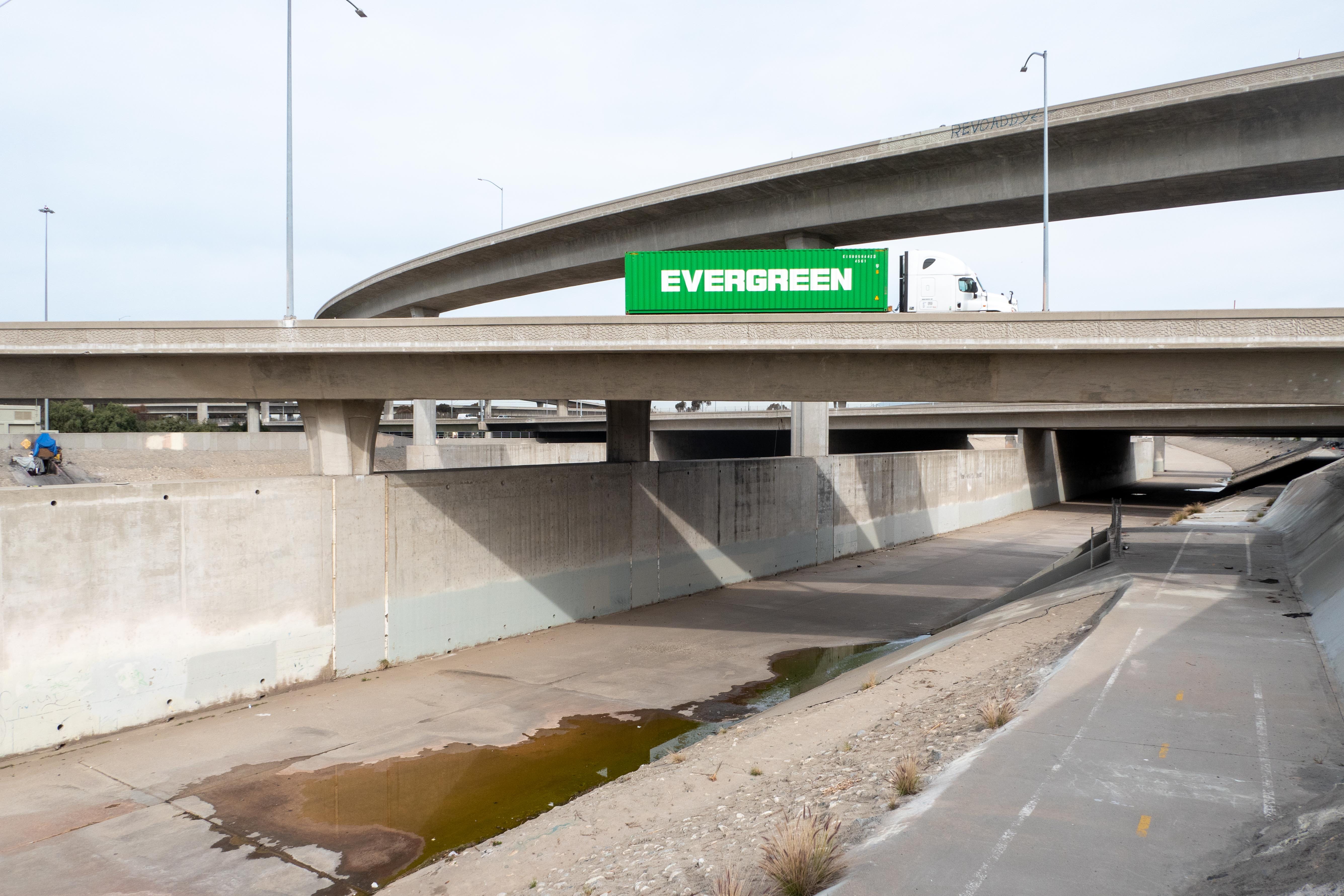
I’m reading A Culture of Growth by Joel Mokyr, a book I started before walking Surrey, England, because I’ve always been intrigued by the question of why some countries become rich while others don’t.
Why the Industrial Revolution happened in England rather than China or Germany is one of those questions that has launched a thousand books, careers, and theories, and Dr. Mokyr’s answer is (oversimplifying): England had a foundational belief in the abilities of man to shape their world, as a result of the Enlightenment, which enabled the creation of laws, institutions, and businesses focused on bettering society through innovation, technology, and economic progress.
That idea that man could, and should, shape the world to achieve sustained and substantial economic growth was a substantial shift in thought. Prior to the Enlightenment, most of the world had an “Ecclesiastes view of history,” which saw long-term change as neither possible (”there is nothing new under the sun”) nor good, since it leads to sinful riches.
This change, which was fomented among then obscure intellectuals questioning the dominant Catholic view of the world, was necessary, and in the end sufficient, for the Industrial Revolution. Our modern world of immense wealth, technology, relative secularism, and intellectual hubris, is the end result of that, and that, as I argued last week, is in totality, a good thing. 1
Mokyr, like me, believes that culture2 plays a primary role in a nation's development, more than its tangible assets such as resources and geography. Institutions are, in this view, downstream, and while they influence significantly how a nation evolves, including its intellectual life, they are physical manifestations of a people’s beliefs, which precede them.
I side with his thesis, which while not caustically anti-religion, does believe that the church needed to be first culturally defeated for the Industrial Revolution to have happened, for the sciences to become dominant, and for our modern world of immense material wealth to emerge.
Despite my positive view about faith and my concern over the hubris of the sciences, I don’t have an issue with that. A successful society (which fulfills the needs of the majority of its citizens) needs both science and religion, and giving either a cultural monopoly, as the church once had and arguably the sciences do now, is the problem. You need both in balance, with the sciences for material comfort and faith as the spiritual salve, as well as for addressing foundational questions, such as what is the whole point of this. To borrow from Augustine, you need technology for the City of Man to thrive and a faith for the City of God.
Science to keep mankind moving forward, and religion as horizon for where we are going, as well as reminder that no matter how far we go, we will always fall short.
That is why I believe that engineering is a nobler pursuit than the pure sciences, because its focus is entirely on improving the City of Man, and in terms of what has delivered real improvements to our lives, it trumps the sexier fields such as particle theory, or cosmology, or pure math.
There is, at least among theorists when I was in grad school, a stigma attached to engineering, which is seen as nothing more than dressed-up auto mechanics and carpentry, but building the messy infrastructure of modern living and having the audacity to dream of projects such as tunneling beneath oceans and constructing canals between seas at different elevations, then actually going out and doing it, is human hubris at its best.
So despite my PhD in theoretical physics, I’m an unabashed big projects nerd, with special fondness for how we have tamed rivers. I approach bridges, canals, locks, dams, and the other marvels of aquatic engineering the way most travelers view museums and five-star restaurants, as the must-see sights.
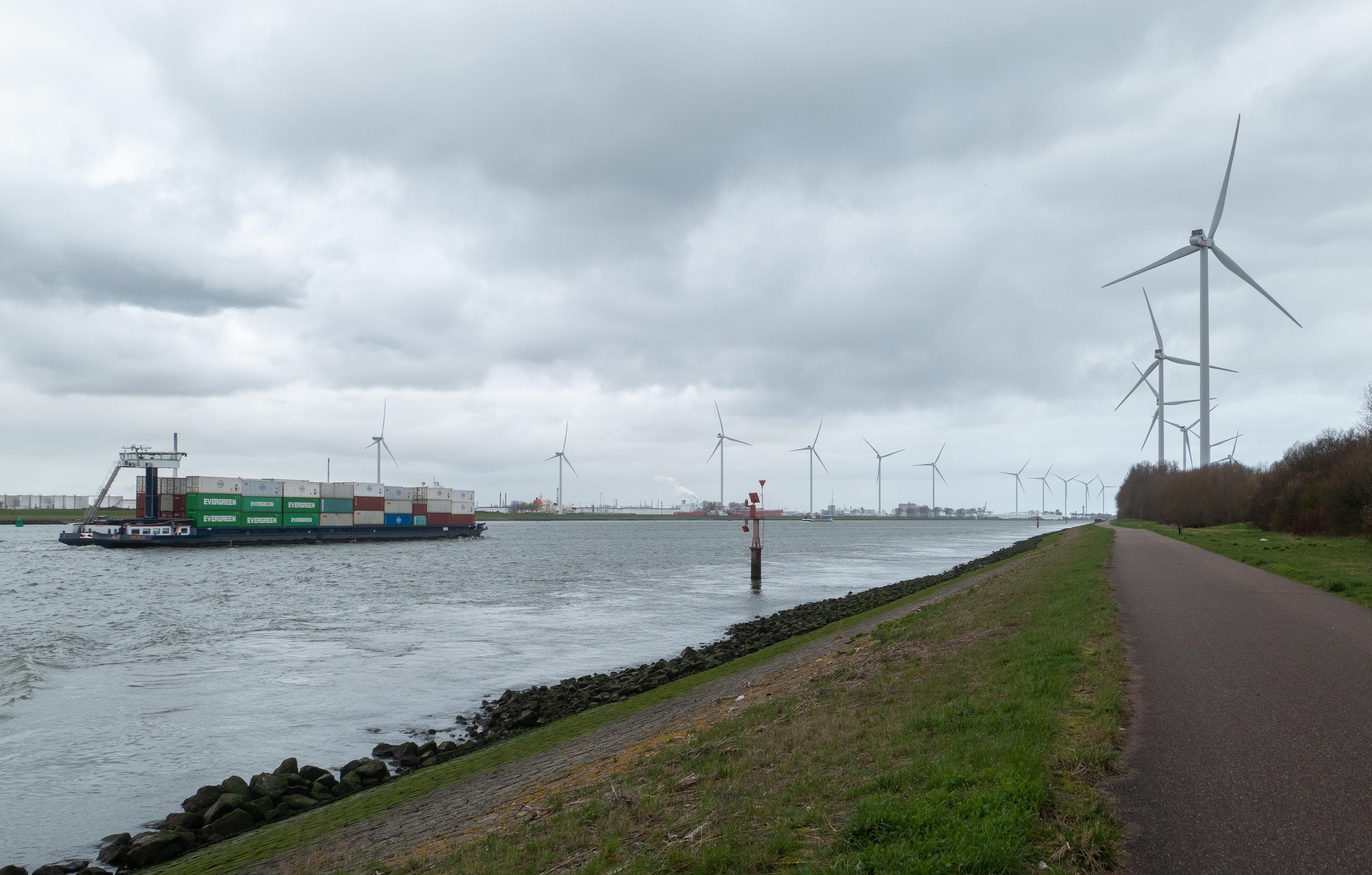
My favorite memory of my walk across the Netherlands, a country defined in my view by its engineering excellence (it was crafted and forged from a flooded swamp), was walking out to the mouth of the Rhine to view the world’s largest tidal dam.
I’ve now done ten of those hundred-mile-plus treks, where I walk from city to city, carrying my possessions on my back, and given that requires a high density, it is not surprising many of those have been along mighty rivers or canal complexes, such as the Rhone, Rhine, and most recently, the Thames and Wey.
Rivers and seas are the original highways, and harnessing them the first and prime example of the power of human ingenuity. I don’t remember where I read it, but someone pointed out that all of Europe is within a five-day walk, or boat trip, from the ocean, and once you see that, the course of history makes a lot more sense. It is why civilization began along river valleys and then thrived around the rim of the Mediterranean.
It’s also why, despite believing Jared Diamond’s book Guns, Germs, and Steel is overrated3, I don’t dismiss it entirely. While I might be a culturalist, geography does matter. Some regions are more gifted for growth, and Europe, with its networks of rivers, is one of those. That the Europeans rose to the occasion and leveraged the once mercurial network of waterways, harnessing them to build some of the greatest civilizations mankind has known, is due to its culture of excellence. A culture that was built on a fundamental belief in man’s potential, and that came with a shared moral system that was not only just but that tempered humans’ hubris, by reminding them that no matter what they did here on earth, there was something larger out there. Well, mostly tempered it. Human hubris has a way of breaking any containment dome put on it, no matter how many past examples exist of how destructive that is.
North America is another region blessed with good geography, and we have our own less flashy, far colder, Mediterranean4, which is the Great Lakes system. That you can make it from Duluth (or Chicago, Detroit, etc.), with a load of timber, iron ore, corn, grain, and coal, to New York City, or the Atlantic, all by low-cost freighter means the Midwest and all its resources are ‘unlocked’.
The whole Rust Belt and all its cities, and then the Midwest, was built around this and yet everyone kind of shrugs about it now.
The construction of the Erie Canal supercharged the whole network and arguably made New York City, rather than New Orleans, the premier city of North America, where nothing is made but everything is traded. A tradition of middleman excellence that it continues to this day5.
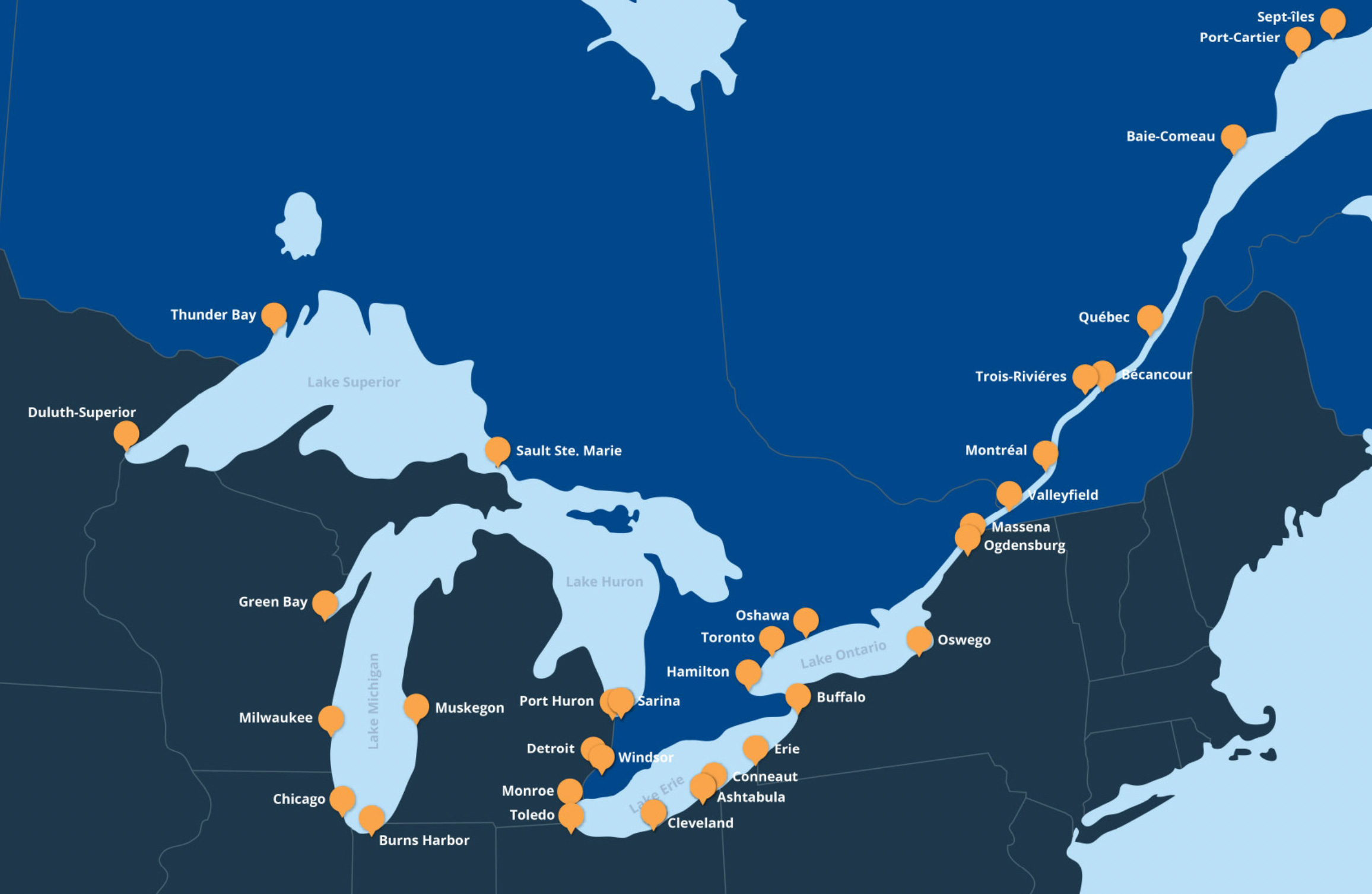
Canal systems, like the Erie Canal, are largely forgotten now, but I’ll never stop being awed by them. Three hundred miles of navigable man-made flat waterways that pass through and/or over steep hills, across valleys, many built entirely without machine power. The older canal systems of England, the Netherlands, and the U.S., as well as modern lock systems, including the eight that allow a freighter to bypass Niagara Falls and go from Lake Erie to Lake Ontario, are more impressive to me than our having landed a man on the moon. They are not just whims of the fantastical, but magnificent feats of human ingenuity essential to our material-rich lives.
I’m convinced that if you transported a normie from 4000 BC to today, they would be more astounded by the Panama Canal, Akashi Kaikyō Bridge, and any regional airport (we can fly!), than that we made it to the moon, because each is relatable, and awe-inspiring6. This is what we wanted to do, but couldn’t, and we have finally achieved it!
The UK began the Industrial Revolution and consequently once led the world in building great projects. That baton of excellence then passed to the U.S., which given our vast resources and gifts of nature, was able to run even further with it to build and do many great things, including that landing a man on the moon I devalued earlier.
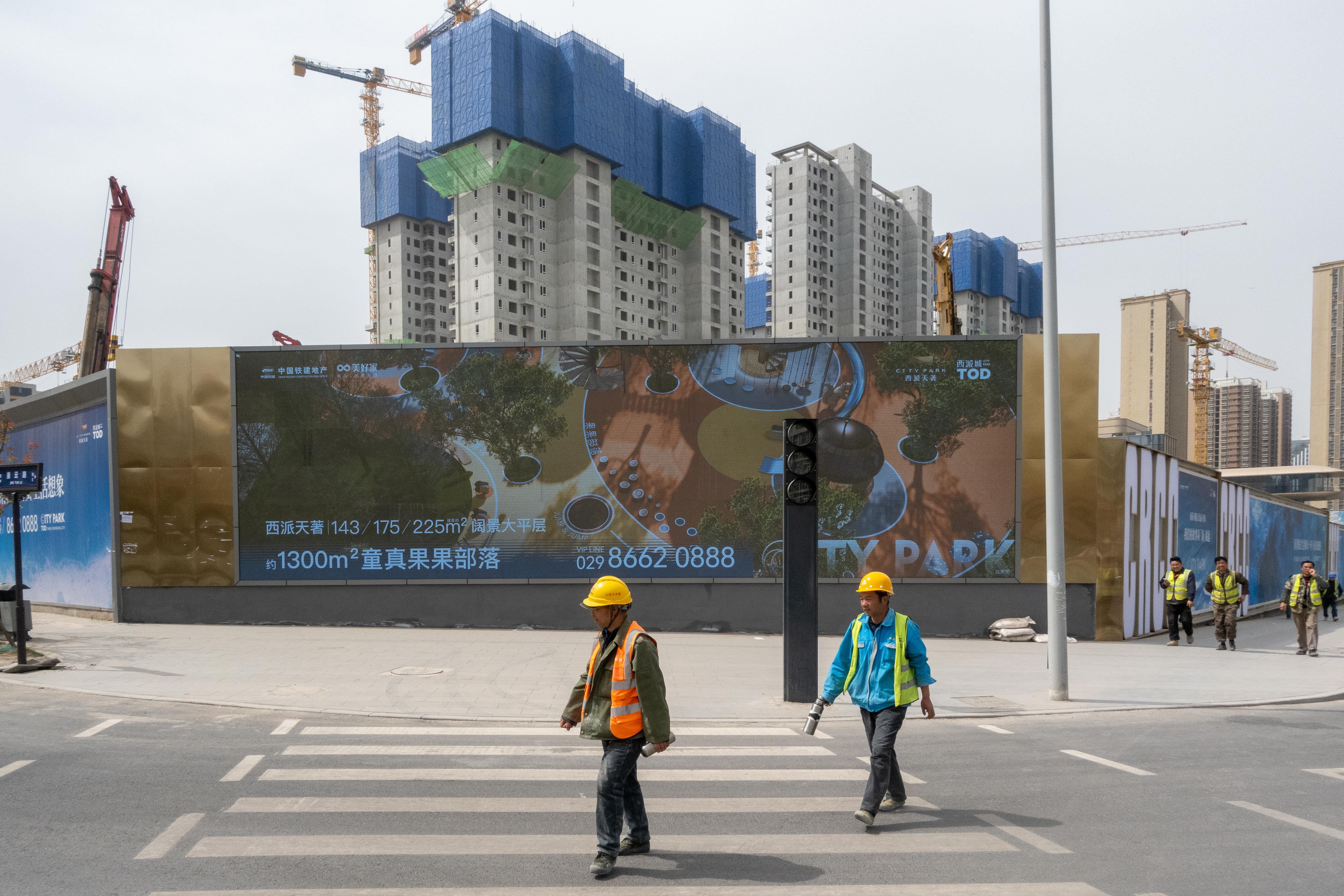
China arguably now owns the baton, and their “can-do” ethos is what I appreciate most about being there, which feels like being in an updated version of the U.S. circa 1950, politics aside.
We still do build great things, but not at the pace we used to, and why we’ve abdicated that role is another topic that has launched a thousand arguments that won’t be settled anytime soon, if ever. My own contribution to the debate goes back to the start of this essay, which is about culture. We (the political class) placed such a high premium on a narrow definition of economic growth (profits) that we lost the forest for the trees and in the process changed our culture.
Free trade is a net positive economically, but when you offshore your manufacturing willy-nilly, you also end up offshoring central parts of your culture, which then atrophy without use, including expertise, excellence, and most dangerously, the “can-do” belief.
Culture is a body of information continually, and often informally, passed from one person to another, and when your citizens lose hands-on experience with building things, the natural intuition to do that withers away. A father/mother who never makes anything is unlikely to have a child who builds things.
That we did choose to offshore so much has contributed to why the Rust Belt is now called that, rather than the Industrial Heartland7. It is also why Los Angeles, despite its reputation as a city of Hollywood, has a strong claim to being the new American Industrial Heartland given its proximity to China, the port, and the network effects from those.
That isn’t to say the U.S. no longer has a culture of economic excellence, but rather if we think that geography alone is destiny, and let our culture wither, then we are jeopardizing our future. Cultures change, sometimes rapidly, and institutions alone cannot keep them from doing so if the underlying foundational beliefs erode.
It also isn’t to say that the Great Lakes system is dead, it is still very active, with yearly shipping in the hundreds of millions of tons. Which is why my current trip will put me in Duluth next week, despite temperatures below zero8. I want to see for myself how active it still is, and also simply because as I wrote before, I’m an engineering geek and I view the port of Duluth as some people view the Mona Lisa. A must-see tourist sight.
I am writing this from a very cold Chicago. My plan is to take a bus to Milwaukee on Tuesday (20th), then one to Minneapolis, then another to Duluth, where I hope to be sometime around the 25th or so. As usual, if you are in any of those cities, especially Duluth, please reach out!
What I do after Duluth is up in the air, but my goal is to continue, by bus, towards the west coast, via the Northern route. Not sure how far I’ll make it, but we will see.
Until next week!
This is one of the reasons when I am asked by teenagers what career to pursue, I suggest (assuming they have an interest in the technical) going to the Colorado School of Mining (or similar institute), because you get real world skills, almost always find a job, and can use it to see the world.
His definition of culture, and there are many out there, is “a set of beliefs, values, and preferences … that are socially transmitted and shared by some subset of society”.
Another definition, by the anthropologist Clifford Geertz, which is more nuanced, is—Culture is “a web of symbols or historically transmitted patterns of meanings embodied in symbols, a system of inherited conceptions expressed in symbolic form by means of which men communicate, perpetuate, and develop their knowledge about and attitudes towards life”.
In The Secret of Our Success, Joseph Henrich defines culture as “… the large body of practices, techniques, heuristics, tools, motivations, values, and beliefs that we all acquire while growing up, mostly by learning from other people.”
They all get to the same point, which is that humans are a cultural animal in that we are born physically helpless (imagine a human toddler dropped into the forest on its own, compared to a young raccoon, cat, or roach) and we only survive and thrive because of all the information we learn from the adults raising us.
There is a lot of good to be found in Guns, Germs, and Steel, especially on the history of agriculture, but he is about as dismissive of culture as possible. Geography matters, but it isn’t deterministic in the way Dr Diamond argues. It’s been over a decade since I last read it, but my view at the time was that he went in with a thesis, based on a political view, and argued to reach that.
The coast of California is another Mediterranean, in climate.
Trenton famously has the slogan "Trenton Makes, The World Takes." New York City's could be "The World Makes, NYC Takes Its Cut."
Ok, what they would probably really really be amazed by is any blockbuster superhero movie. Or the skyline of any modern city.
That is only partly true. Automation is also responsible for the decline, although had we kept the new manufacturing in the U.S. then the Rust Belt would be less Rusty. Also, as I wrote about with Michigan City, there still is a fair amount of manufacturing taking place.
I actually want to be in Duluth in January, because despite the harbor being less active, I like to be in a place when it is at its most place-y. And for me, that means Duluth when the high is minus two degrees.
Seems to be the thesis of "The Ancient Engineers" by L. Sprague DeCamp, except that book was explicitly anti-faith.
Pretty much every educated human knows who Augustus Caesar was, but almost nobody knows the name of the architect of the Roman aqueduct, in spite of the fact that reliable water supply has more real world impact in humans today than anything Augustus did.
I always enjoy reading your essays and this was no exception. One minor correction in the first footnote: Colorado School of Mines (not Mining) which I know because my father attended college there and went on to have a long career in oil exploration. He loved that school and loved the career it enabled him to have.