
Empty Revolution: A Walk From Ulm to Augsburg (Germany)
Enough solitude to read history

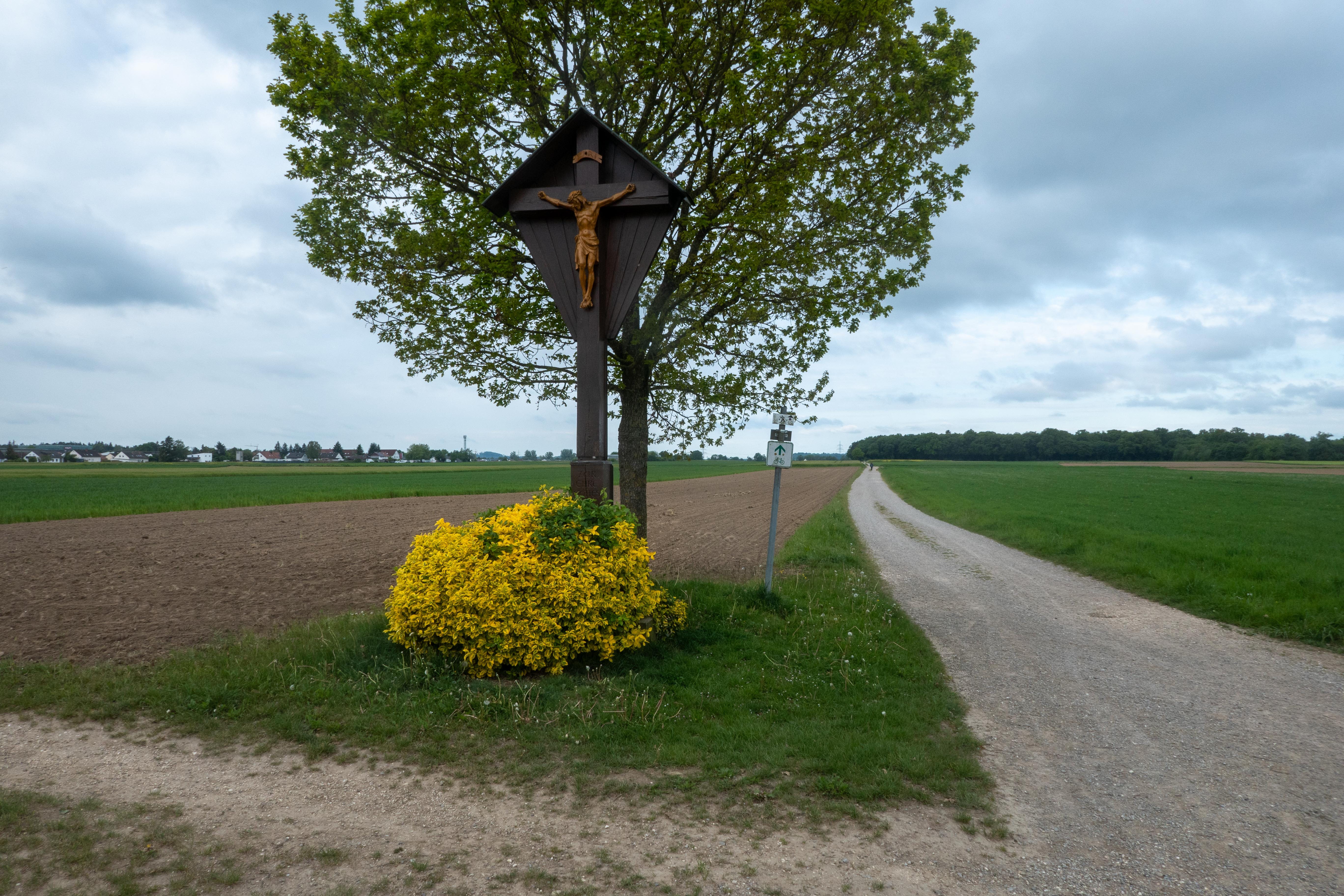
Half way through my first day’s hike, from Ulm to Oberfahlheim, I realized this was going to be a lonely trip. While I was passing through a village every few miles, there was nobody around, except in cars zooming past me, or if lucky, at the single open bakery where they would jump out, get their bread, and then quickly drive off.
That emptiness was especially striking because the towns themselves were idyllic, with a uniformly white aesthetic, like human-sized villages built by a child with limited Lego bricks — a mix of white homes with red roofs, around a central austere white church, topped with nesting white storks, and then a single impossibly high maypole with a scraggly fir tree at its peak. Within a minute of leaving one town, I would see the next in the distance, with the steeple and tree-topped maypole rising over the fields of wheat and rapeseed, but by the end of the day I’d given up thinking it might be different. I’d given up thinking that it would finally be the one with a central plaza with busy cafes ringing the church, or even just a single spot I could sit and watch people. I was in Swabian Germany, not Lombardy, and while they may both be Catholic, linked by thousands of years of history, and only a quarter day’s drive apart, they couldn’t have been more temperamentally different.
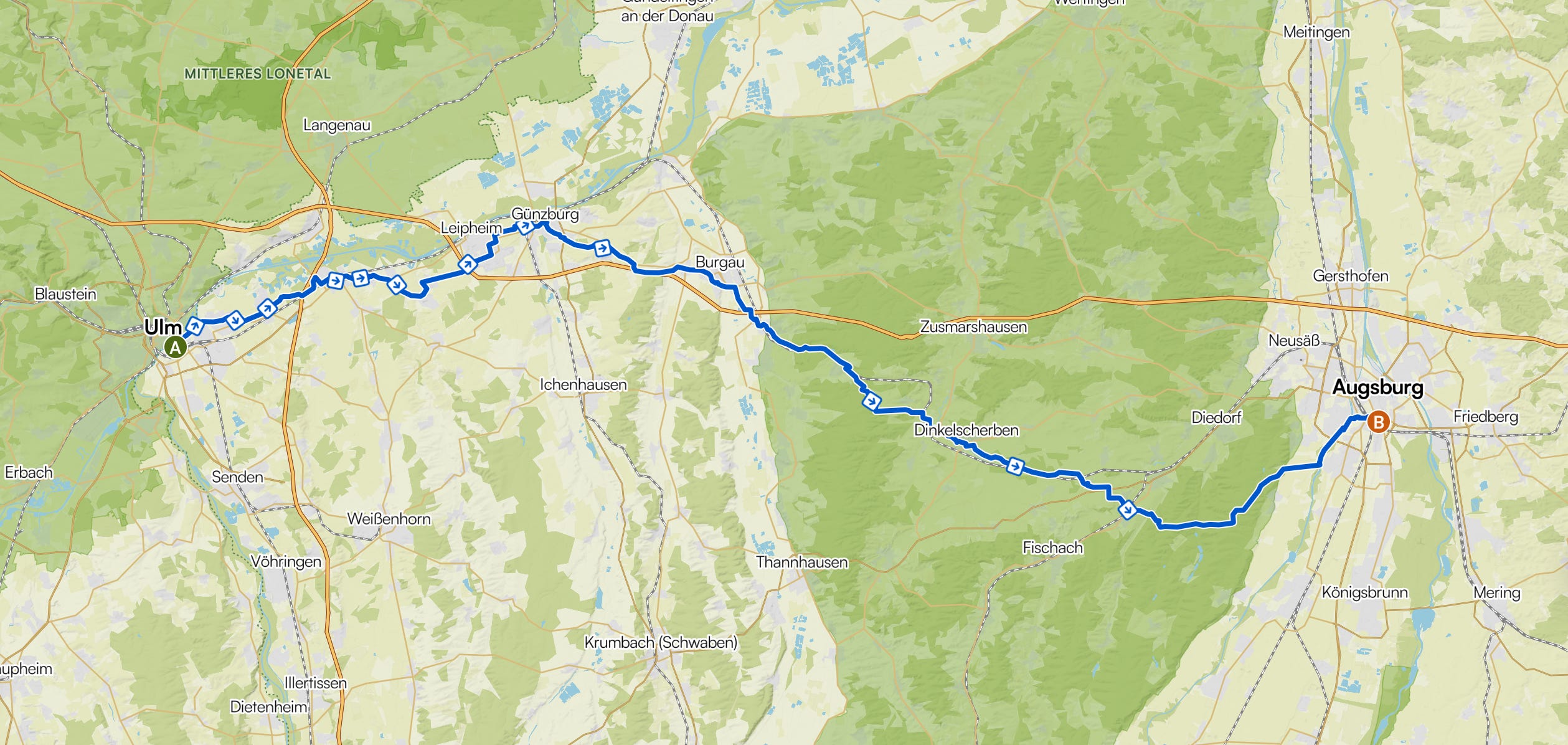
I’d figured that would change on my second night in Günzburg, a larger town with a beautifully preserved medieval section, and an adjacent Legoland amusement park, but while it was a Saturday night, and there were plenty of cafes on the map, lining century-old cobblestone streets, half were shuttered, the other half despondent. I spent the evening wandering around trying to find something, anything, that felt alive, but the only place bustling was the McDonald’s on the edge of town. I went to sleep not entirely disappointed, because I could attend mass at the magnificent Rococo cathedral1 adjacent to my room the next morning, and so when its bells woke me, I hurried over excited, only to find it shuttered, the plaza out front emptied except for a solitary white stork, completely uninterested in me. Eventually the stork turned and looked at me like I was an idiot, ‘Don’t you know, silly human, that it’s Sunday and this town doesn’t open up until at least noon, if that?’ So I took the stork’s advice and trudged out of town wondering what in the world Germans did on their Sunday.


This went on for three more days, of fifteen mile walks through fields dotted with religious icons, through somnolent villages, before I gave up and jumped on a train to Augsburg, fast forwarding the last twenty miles. It was all very pleasant and relaxing, with well maintained, but rarely used, paths for wherever I wanted to go, but after Zusmarshausen it got worse, the towns got smaller and somehow emptier, the logistics of getting food harder, and I was getting frustrated. I don’t travel to be in a foul mood, and I didn’t want to begin to hate Germany, to curse another closed bakery. The Germans themselves don’t seem to mind any of this, at least the ones I spoke to, especially on that Sunday when I finally saw others outside, families freed from work, enjoying the enforced relaxation. I can’t celebrate felicity, can’t complain about how us moderns are deluged with stimuli, and then get mad when a place doesn’t cater to my transient whims.
Anyways, my time in Ulm had been fantastic, and perhaps Augsburg would be the same.
Within my first hour in Ulm I got an unexpected present, realizing why I thought it was famous, despite being a town of only a hundred thousand which two separate people on my train from Frankfurt had asked, ‘why you going there, why not Munich?’ Ulm is the birthplace of Albert Einstein, a fact I’d read before and forgotten, a fact revealed to me by an easy-to-miss monument on the spot where the house had been, which is now adjacent to a McDonald’s. Given my affection for both, and my conviction that being within throwing distance of Grimace is an honor, it was a fortuitous beginning.


In those first two days in Ulm I also remembered what I’d liked so much about Germany, when I’d walked from Dortmund to Cologne, which was great beer (every city has their own traditional brewery like Ulm’s Brauerei Gold Ochsen), vastly under-appreciated cuisine, and the finest bakeries in the world. German food suffers by comparison to its neighbors, barely registering on global lists, but it’s within spitting distance of Italian and French, and like those its consistent quality, at all levels, is the most noticeable to an American. I was in Germany during white asparagus season, and while I didn’t order anything from the special asparagus infused menus, that the Germans care enough that every restaurant from high to low builds entire meals around it, is the point.
Instead I ate Maultaschen, because Ulm is in the heart of Swabia (Southwestern region of Germany) and as the saying goes, when in Swabia, do as the Swabians do, which is to consume pasta with meat hidden inside during Lent to trick God. A tongue-in-cheek sacrilege which earned the dish the nickname Herrgottsbscheißerle, or "little cheats on the Lord." A piety-on-the-outside-pragmatism-on-the-inside move that struck me as not dissimilar from flipping your church Protestant just after you crushed a protestant uprising that threatened your earnings.


That is exactly what the Ulm elite had done in 1530, as I learned while visiting the Ulm Minster, which is not only the tallest church in Europe, but also one of the earliest to switch to Protestantism (1530), which it still is. Yet Ulm had also only five years earlier led a confederation of German cities (Swabian League) that had violently suppressed an uprising of peasants at the Battle of Leipheim (1525). An uprising inspired by the very Martin Luther that they now embraced, at least theologically.